Addiction & Grace Pt. 1
What is addiction? If you were to walk into any secular 12-step recovery meeting, you would hear a lot of different perspectives and vantage points. In such groups, concepts such as god, spirituality, and the philosophy of life are subjective topics. No one is right and no one is wrong. Your truth is your truth and each individual is called to accept and support the perspective of everyone else in the fellowship. This postmodern frame of reference flows forth from the mindset that says, “there are many paths to recovery and no one path is absolutely right”.
However, such subjectivity, tolerance, and postmodern thought amongst secular recovery circles comes to a screeching halt when the question is posed, “What is addiction?” In a nearly unanimous fashion, the resounding answer to this question is, “Addiction is a disease!” To challenge such an assumption amongst the said circles is certain to produce a spectrum of eye rolls at best and outright hostile outbursts at worst. The reason for such responses to this challenge is because this matter has been settled, right? The scientific and medical communities alike have diligently studied this topic, applied the science, and cultivated the medical interventions necessary to slay the beast of substance use disorders!
This is the prevailing mindset in the majority of such circles and to challenge the “facts” is seen as intolerant, hindering progress, keeping people sick, and perpetuating stigma. To summarize the prevailing attitude of the secular recovery world, “We have figured this thing out! So let’s stop the debate on what addiction is and let's get to applying the solution!” This thought pattern not only finds a home amongst secular recovery programs, but also has found a home amongst most Christian recovery circles as well.
This position is not just the prevailing ideology amongst recovery circles, but permeates the majority of all secular substance abuse treatment programs offering care to those in need today. These programs are founded upon this notion that addiction is a disease and subsequent treatment modalities should be built upon this presupposition. The roots of such an ideology go far deeper than mere program development and application. This dogma is the foundation upon which laws governing substance abuse treatment are built. Most treatment centers that receive funding from major insurance companies have built their policies and procedures off of the American Society of Addiction Medicine’s treatment manual and standards. A manual which is founded upon the presupposition that addiction is a disease. Organizations that practice addiction medicine according to these standards are designated as operating according to, “Evidence Based Practices.”
The prevailing best practice in such circumstances is to get individuals who are dealing with substance abuse on some form of medically assisted treatment. Namely, that of Buprenorphine or Methadone and keep them on as long as possible. Even in situations where individuals desire to discontinue such medications, best practice is viewed as pushing them to stay on the meds as long as possible. Sadly, I have even seen cases where people who were battling cocaine addiction with no urinalysis indicating potential opioid abuse were encouraged to begin medically assisted treatment for opioids as a preventative measure. In most cases, to operate outside of such practices or in accordance with conflicting principles may result in a denial of licensure and the funding that is associated with it. In fact, to not adhere with such practices and tenets is viewed as being anti-harm reduction and hurtful towards those who are suffering in addiction.
So it is on the presumption that addiction is a disease that an entire substance abuse treatment industry is built upon. Yet, we must ask, is this presumption correct? Many years ago, I myself battled opiate addiction and by the grace of Christ alone, I was delivered from it. I was one of these individuals who was told, “In order to beat this, you will be on Buprenorphine for the rest of your life.” I now have 14 years clean from heroin. In my early months and years of sobriety, I had (and still have) a desire to give back to those still struggling with addiction. As a result, I began to pursue the goal of becoming a drug and alcohol counselor. My thought was, “This matter has been determined by the experts and I want to be one who would bring the information to the masses!” Yet, when I began my undergraduate studies, I became very disillusioned, by just how ambiguous the “experts” understanding of addiction was. I’ll never forget the astonishment that I felt in my first chemical dependency course when I read that this wasn’t a settled matter. The quote that hit the hardest was from our core textbook, which stated:
If you were to devote or if you were a devotee of television talk shows or read a small sample of the self-help books that line the bookstore shelves, you would easily be left with the impression that research has discovered the causes of, and the treatment for, alcoholism and addiction to the other drugs of abuse. Unfortunately, nothing could be further from the truth. Much of what is known about SUDs, or substance use disorders, is based on mistaken assumptions, distorted data, clinical myths and theories, or, in many cases, incomplete data… Thus, much of what we think we know about substance use disorders is not based on scientific research but on assumptions, guesses, and limited data. However, it is on this foundation that an entire rehabilitation industry has been based. It is not the purpose of this text to deny that SUDs cause a terrible cost in individual suffering into society. That, hopefully, the reader has heard to understand how little is really known about SUDs.
Imagine the confusion, discouragement, and frustration that I would have felt as a newly recovered undergraduate student seeking the truth, only to discover that the scientific and medical communities didn’t possess it.
My frustration would only continue to grow as I continued my studies in pursuit of my certification as an Advanced Alcohol and Drug Counselor. In these studies, the reality that the disease model of addiction was not a settled matter only solidified. Rather, my studies revealed that leading voices in the field were actually at odds with one another on the topic. Some say it is a disease based on data found presented through a variety of disciplines. However, these leading voices simultaneously acknowledge that they know very little and research is still in its infancy stages. This was most clearly seen in an article by the Director of the National Institute on Drug Abuse, Nora D. Volkow, who states:
As a result of scientific research, we know that addiction is a medical disorder that affects the brain and changes behavior. We have identified many of the biological and environmental risk factors and are beginning to search for the genetic variations that contribute to the development and progression of the disorder. Scientists use this knowledge to develop effective prevention and treatment approaches that reduce the toll drug use takes on individuals, families, and communities. Despite these advances, we still do not fully understand why some people develop an addiction to drugs or how drugs change the brain to foster compulsive drug use.
This infantile understanding doesn’t just apply to a general knowledge of addiction, but also to an understanding of how to treat it! Again, Volkow states:
Some critics also point out, correctly, that a significant percentage of people who do develop addictions eventually recover without medical treatment. It may take years or decades, may arise from simply “aging out” of a disorder that began during youth, or may result from any number of life changes that help a person replace drug use with other priorities. We still do not understand all the factors that make some people better able to recover than others or the neurobiological mechanisms that support recovery—these are important areas for research.
In the same vein, other experts examine and interpret the same data, yet come to critically opposite conclusions, even denying the disease model altogether. One instance of this is seen in the Canadian Medical Association Journal, which states:
Addiction does not meet the criteria specified for a core disease entity, namely the presence of a primary measurable deviation from physiologic or anatomical norm. Addiction is self-acquired and is not transmissible, contagious, autoimmune, hereditary, degenerative or traumatic. Treatment consists of little more than stopping a given behaviour. True diseases worsen if left untreated. A patient with cancer is not cured if locked in a cell, whereas an alcoholic is automatically cured. No access to alcohol means no alcoholism. A person with schizophrenia will not remit if secluded. Sepsis will spread and Parkinson disease will worsen if left untreated. Criminal courts do not hand down verdicts of “not guilty by virtue of mental illness” to drunk drivers who kill pedestrians.
In reviewing such statements, what we have to realize is that this discord amongst secular addiction experts stems from a failure to have a holistic view of man. Namely, they are seeking to develop an anthropological understanding of addiction, without having a comprehensive understanding of man. This stems from the foundations of the worldview that the secular experts are operating in accordance with. Specifically, the foundational belief of the secular treatment and recovery ideologies are founded upon evolutionary naturalism. Here, any semblance of the supernatural is denied and mankind is assumed to be purely biological creatures. As a result, it is assumed that all thoughts, actions, and impulses flow forth from genetic predisposition and cognitive development, in association with sociological factors that have influenced the development of both. In summary, we are a living brain and purely biological.
This picture of man is incomplete at best and unbiblical at worst. It denies the reality that true humanity is more than just a brain. Rather, true humanity is both physical and spiritual. We are a body and a soul in union with one another to complete the image of the true man. So to deny the existence of the soul is to miss a most critical component of human existence necessary for addressing matters of addiction. The reason for this is that man is the image of God, yet corrupted in thoughts, actions, and affections as a result of the fall. This corruption has disrupted and distorted the internal function of the human soul which was created for the glory and worship of God (Rom. 11:36).
As a result, as the Apostle Paul tells us, sin’s corruption of the mind has resulted in a mental decay. This drives men to deny the God they are created to worship and into the arms of various idols that are fashioned out of the created world around them (Rom. 1:19-21). Thus, an incomplete and unbiblical understanding of anthropology and the absence of the doctrine of sin are the missing pieces in the secularist’s understanding of addiction. In this denial, they will never be able to truly comprehend, nor rightly treat the root of addiction that lies in the hearts of men.
However, such subjectivity, tolerance, and postmodern thought amongst secular recovery circles comes to a screeching halt when the question is posed, “What is addiction?” In a nearly unanimous fashion, the resounding answer to this question is, “Addiction is a disease!” To challenge such an assumption amongst the said circles is certain to produce a spectrum of eye rolls at best and outright hostile outbursts at worst. The reason for such responses to this challenge is because this matter has been settled, right? The scientific and medical communities alike have diligently studied this topic, applied the science, and cultivated the medical interventions necessary to slay the beast of substance use disorders!
This is the prevailing mindset in the majority of such circles and to challenge the “facts” is seen as intolerant, hindering progress, keeping people sick, and perpetuating stigma. To summarize the prevailing attitude of the secular recovery world, “We have figured this thing out! So let’s stop the debate on what addiction is and let's get to applying the solution!” This thought pattern not only finds a home amongst secular recovery programs, but also has found a home amongst most Christian recovery circles as well.
This position is not just the prevailing ideology amongst recovery circles, but permeates the majority of all secular substance abuse treatment programs offering care to those in need today. These programs are founded upon this notion that addiction is a disease and subsequent treatment modalities should be built upon this presupposition. The roots of such an ideology go far deeper than mere program development and application. This dogma is the foundation upon which laws governing substance abuse treatment are built. Most treatment centers that receive funding from major insurance companies have built their policies and procedures off of the American Society of Addiction Medicine’s treatment manual and standards. A manual which is founded upon the presupposition that addiction is a disease. Organizations that practice addiction medicine according to these standards are designated as operating according to, “Evidence Based Practices.”
The prevailing best practice in such circumstances is to get individuals who are dealing with substance abuse on some form of medically assisted treatment. Namely, that of Buprenorphine or Methadone and keep them on as long as possible. Even in situations where individuals desire to discontinue such medications, best practice is viewed as pushing them to stay on the meds as long as possible. Sadly, I have even seen cases where people who were battling cocaine addiction with no urinalysis indicating potential opioid abuse were encouraged to begin medically assisted treatment for opioids as a preventative measure. In most cases, to operate outside of such practices or in accordance with conflicting principles may result in a denial of licensure and the funding that is associated with it. In fact, to not adhere with such practices and tenets is viewed as being anti-harm reduction and hurtful towards those who are suffering in addiction.
So it is on the presumption that addiction is a disease that an entire substance abuse treatment industry is built upon. Yet, we must ask, is this presumption correct? Many years ago, I myself battled opiate addiction and by the grace of Christ alone, I was delivered from it. I was one of these individuals who was told, “In order to beat this, you will be on Buprenorphine for the rest of your life.” I now have 14 years clean from heroin. In my early months and years of sobriety, I had (and still have) a desire to give back to those still struggling with addiction. As a result, I began to pursue the goal of becoming a drug and alcohol counselor. My thought was, “This matter has been determined by the experts and I want to be one who would bring the information to the masses!” Yet, when I began my undergraduate studies, I became very disillusioned, by just how ambiguous the “experts” understanding of addiction was. I’ll never forget the astonishment that I felt in my first chemical dependency course when I read that this wasn’t a settled matter. The quote that hit the hardest was from our core textbook, which stated:
If you were to devote or if you were a devotee of television talk shows or read a small sample of the self-help books that line the bookstore shelves, you would easily be left with the impression that research has discovered the causes of, and the treatment for, alcoholism and addiction to the other drugs of abuse. Unfortunately, nothing could be further from the truth. Much of what is known about SUDs, or substance use disorders, is based on mistaken assumptions, distorted data, clinical myths and theories, or, in many cases, incomplete data… Thus, much of what we think we know about substance use disorders is not based on scientific research but on assumptions, guesses, and limited data. However, it is on this foundation that an entire rehabilitation industry has been based. It is not the purpose of this text to deny that SUDs cause a terrible cost in individual suffering into society. That, hopefully, the reader has heard to understand how little is really known about SUDs.
Imagine the confusion, discouragement, and frustration that I would have felt as a newly recovered undergraduate student seeking the truth, only to discover that the scientific and medical communities didn’t possess it.
My frustration would only continue to grow as I continued my studies in pursuit of my certification as an Advanced Alcohol and Drug Counselor. In these studies, the reality that the disease model of addiction was not a settled matter only solidified. Rather, my studies revealed that leading voices in the field were actually at odds with one another on the topic. Some say it is a disease based on data found presented through a variety of disciplines. However, these leading voices simultaneously acknowledge that they know very little and research is still in its infancy stages. This was most clearly seen in an article by the Director of the National Institute on Drug Abuse, Nora D. Volkow, who states:
As a result of scientific research, we know that addiction is a medical disorder that affects the brain and changes behavior. We have identified many of the biological and environmental risk factors and are beginning to search for the genetic variations that contribute to the development and progression of the disorder. Scientists use this knowledge to develop effective prevention and treatment approaches that reduce the toll drug use takes on individuals, families, and communities. Despite these advances, we still do not fully understand why some people develop an addiction to drugs or how drugs change the brain to foster compulsive drug use.
This infantile understanding doesn’t just apply to a general knowledge of addiction, but also to an understanding of how to treat it! Again, Volkow states:
Some critics also point out, correctly, that a significant percentage of people who do develop addictions eventually recover without medical treatment. It may take years or decades, may arise from simply “aging out” of a disorder that began during youth, or may result from any number of life changes that help a person replace drug use with other priorities. We still do not understand all the factors that make some people better able to recover than others or the neurobiological mechanisms that support recovery—these are important areas for research.
In the same vein, other experts examine and interpret the same data, yet come to critically opposite conclusions, even denying the disease model altogether. One instance of this is seen in the Canadian Medical Association Journal, which states:
Addiction does not meet the criteria specified for a core disease entity, namely the presence of a primary measurable deviation from physiologic or anatomical norm. Addiction is self-acquired and is not transmissible, contagious, autoimmune, hereditary, degenerative or traumatic. Treatment consists of little more than stopping a given behaviour. True diseases worsen if left untreated. A patient with cancer is not cured if locked in a cell, whereas an alcoholic is automatically cured. No access to alcohol means no alcoholism. A person with schizophrenia will not remit if secluded. Sepsis will spread and Parkinson disease will worsen if left untreated. Criminal courts do not hand down verdicts of “not guilty by virtue of mental illness” to drunk drivers who kill pedestrians.
In reviewing such statements, what we have to realize is that this discord amongst secular addiction experts stems from a failure to have a holistic view of man. Namely, they are seeking to develop an anthropological understanding of addiction, without having a comprehensive understanding of man. This stems from the foundations of the worldview that the secular experts are operating in accordance with. Specifically, the foundational belief of the secular treatment and recovery ideologies are founded upon evolutionary naturalism. Here, any semblance of the supernatural is denied and mankind is assumed to be purely biological creatures. As a result, it is assumed that all thoughts, actions, and impulses flow forth from genetic predisposition and cognitive development, in association with sociological factors that have influenced the development of both. In summary, we are a living brain and purely biological.
This picture of man is incomplete at best and unbiblical at worst. It denies the reality that true humanity is more than just a brain. Rather, true humanity is both physical and spiritual. We are a body and a soul in union with one another to complete the image of the true man. So to deny the existence of the soul is to miss a most critical component of human existence necessary for addressing matters of addiction. The reason for this is that man is the image of God, yet corrupted in thoughts, actions, and affections as a result of the fall. This corruption has disrupted and distorted the internal function of the human soul which was created for the glory and worship of God (Rom. 11:36).
As a result, as the Apostle Paul tells us, sin’s corruption of the mind has resulted in a mental decay. This drives men to deny the God they are created to worship and into the arms of various idols that are fashioned out of the created world around them (Rom. 1:19-21). Thus, an incomplete and unbiblical understanding of anthropology and the absence of the doctrine of sin are the missing pieces in the secularist’s understanding of addiction. In this denial, they will never be able to truly comprehend, nor rightly treat the root of addiction that lies in the hearts of men.
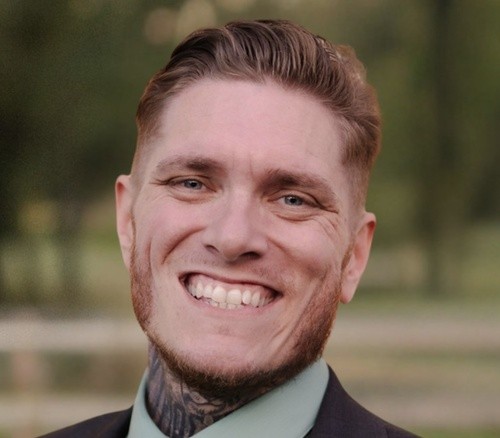
Doug Clarke serves as the Executive Director of MARKINC Ministries, a faith-based 501(c)3 resource ministry dedicated to offering help and hope to the hurting and heartbroken through the triage, treatment, and teaching of Jesus Christ. He is presently pursuing a Master of Divinity at Westminster Theological Seminary, is a certified advanced alcohol and drug counselor (CAADC) through the Delaware Certification Board, and is licensed to preach in the Presbyterian Church of America (PCA).
Share this post:

2 Comments
Hope there's a part 2 . It ended when it was getting good . Looking forward to part 2 ! But excellent !
Thanks Jordan!
n
nPart 2 is posted!